by Jakob Cotton – MA North Korean Studies, University of Lancashire
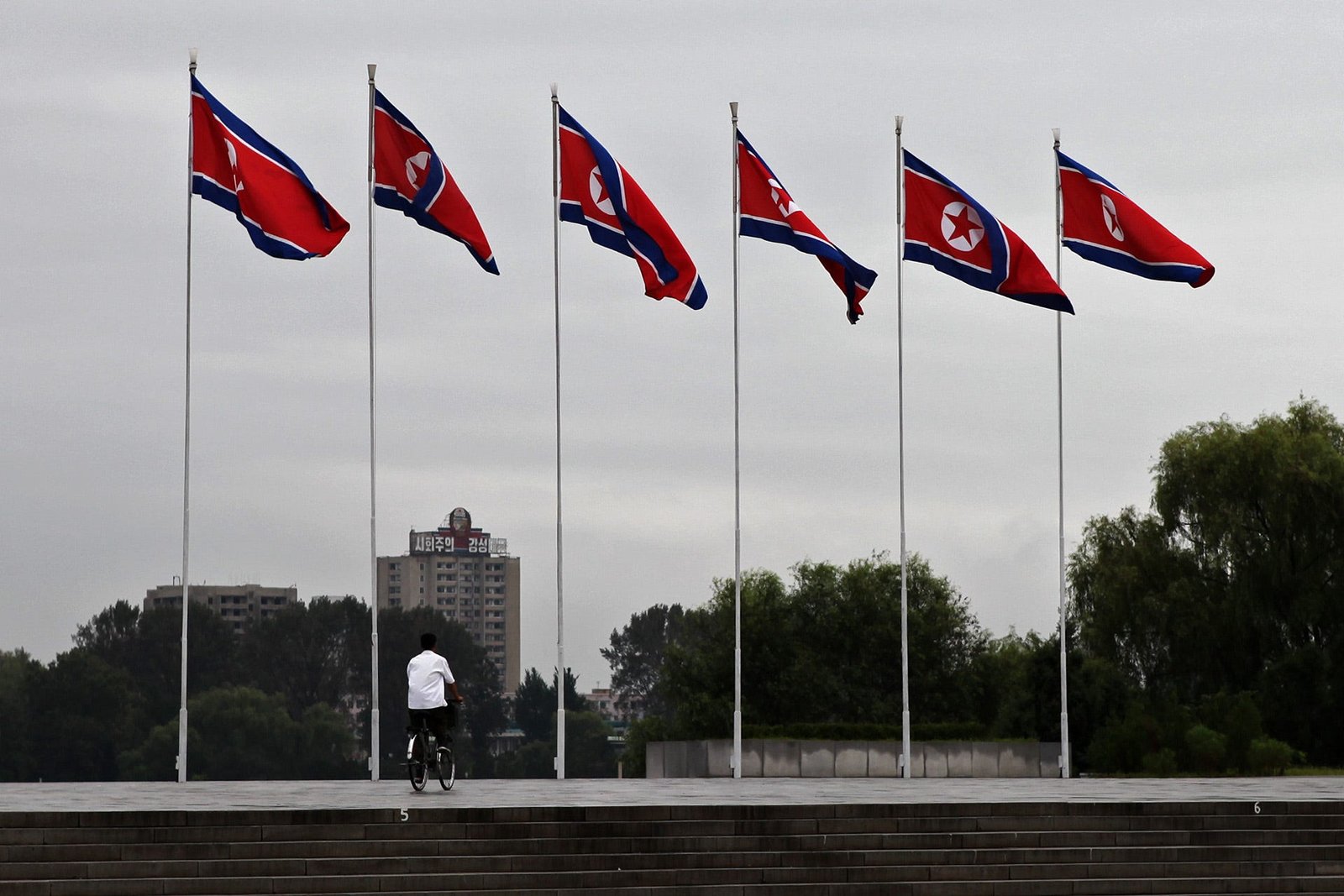
Image credit: North Korea – Pyongyang by Roman Harak, CC BY-SA 2.0
Just over a couple of years ago, I received an offer from the University of Lancashire (previously called the University of Central Lancashire) to study something very uncommon. This is something so unique that the university is, to this day, the only institution outside of Korea to offer such a programme. That programme was a Master’s degree in North Korean Studies. Many people, when I tell them about my study on this programme, have seemed perplexed and unsure of my reasoning for studying this subject. The merits of this study, however, have always been crystal clear to me. In this article, I’ll be detailing some of the experiences and insights I’ve gained throughout my research into North Korea.
From a very young age, I have been deeply interested in politics and the social issues that shape our world. The harms of political extremism have always been an area of great concern for me and, since my teens, I have devoted much time to researching far-right and religious extremist movements, as well as the threats they pose to society. My interest in politics and passion for social change are very important facets of my life, and the opportunity to undertake a programme in North Korean studies was a no-brainer for me.
Why did I choose to focus my research on North Korea?
Picture this – I was 15 years old with a rapidly-developing interest in international affairs, looking for any and all documentaries to broaden my young and curious worldview. One day, YouTube recommended something to me that completely shattered my ideas of what was possible in politics. It was a documentary about North Korea and its highly unique and authoritarian political system. Horrified yet intrigued at the brand new world that was being shown to me, in which a country of 25 million people lived their lives in total subservience to dictator Kim Jong Un, I carried on reading and watching everything I could about this fascinating country. Believe it or not, my previous interest in IT also played a role in my developing interest in North Korea as I had found out that, instead of using computers running on Windows or MacOS, people in North Korea had no choice but to use an entirely different system called “Red Star”, in which all of their activity was monitored and restricted to heavily state-controlled content. I also found out about North Korea’s intranet, completely segregated from the internet that the rest of the world knows and loves. Many of the other videos and articles I looked at also shed light on the country’s appalling human rights record and I began to hear of the appalling treatment faced by people in the country’s prison system, which has drawn strong international condemnation from all corners of the globe.
My fascination with North Korea persisted over the coming years and I became very invested in developments such as the 2017-2018 North Korean nuclear crisis which saw bitter spats and threatening nuclear rhetoric exchanged between US President Donald Trump and Kim Jong Un. This culminated in three meetings between the two leaders as they formed a “bromance” and strove for a peace agreement between the two long-time adversary states. All of these developments were happening at a crucial time in my life, as I was leaving high school and transitioning into adulthood. This perhaps went some way to amplify their importance to me. At this crucial time, like many people, I was very fearful of a nuclear conflict instigated by North Korean leader Kim Jong Un, often portrayed in the media as a trigger-happy maniac intent on causing as much suffering as possible (which is in many ways true). To me, North Korea was the evil “other”, a boogeyman that posed a real threat to the world I lived in.
Soon after the 2017-2018 nuclear crisis, I left college to continue my studies (on a degree in Media Studies). It was at this point that my interest in the country “moved up a level”. It became not just a fascination with the country itself but the wider implications of what it was doing, a sign that my interest had matured significantly. I became a lot more aware of how the country’s political system works, as well as what socialism and communism actually entail. I also learnt about how North Korea’s approach to these things differed from other ideologically-communist countries, such as its all-encompassing adoption of Kim Il Sung’s juche ideology (put simply, an ideology of political independence and self-sufficiency introduced by the leadership in the 1950s) extremely heavy emphasis on militarisation (e.g. it’s Songun, or “military-first” policy) and a wholly unapologetic embrace of fierce nationalism that echoes a lot of far-right sentiments.
At the end of bachelor’s degree, I knew I wanted to incorporate my interest in North Korea into my career in some way. I was faced with a choice, and I had two options in my head – I could do my Master’s in media studies, or I could take up the North Korean Studies programme I had found on the University of Lancashire’s website. My decision to take up the latter came easily to me.
My experiences as a North Korean Studies student and why I think studying North Korea is important
Like many other students, I moved to my university’s city (in this case, Preston) to start my course whilst staying in student accommodation. I felt a bit out of place, not just for being the oldest in the flat, but for studying a subject many would find very unusual. Upon telling my new flatmates and wider social circle what I was there to study, I heard the common response of “that’s crazy” or some variation of “what can you even do with that?”. Although I knew it could be described as a very “niche” subject, I was surprised to see only six people in attendance on my first day of the programme. I got along well with my course mates (all with their own fascinating stories behind wanting to study North Korea) and I began attending classes for such modules as “Divided Nations: Disputes, Violence and Conflict”, “History, Politics and International Relations of North Korea”, “Economy and Society in North Korea”, “The Anthropology of the Asia Pacific” and even “Sustainability and Environment in Korea and Beyond”. On top of this, I also decided to write a dissertation that explored the way disabled and neurodivergent people are treated in North Korea, an area that has seen relatively little research and made for harrowing reading. The subjects I produced work on throughout the programme were all highly intellectually stimulating and, while much of the subject matter was exclusive to North Korea, a lot of it was more generalised (e.g. studying the factors contributing to societal division all around the world, such as in Trump-era America). There are so many areas within the political context of North Korean Studies that apply in other regions of the world too.
One of the main reasons as to why I personally find it important (and others interested in politics) to study North Korea is very simple. This is a country with perhaps the world’s most unique and unprecedented political system, and no other country has ever tried anything like it before. We need to analyse these countries and assess what works, what doesn’t (and, in North Korea’s case, doesn’t just “not work” but has horrific consequences for human rights) and how these systems compare to rest of the world. On paper, North Korea’s Socialist Constitution espouses a system in which the working masses have achieved emancipation from capitalism and live under a unique system in which the relationship between the leading Workers’ Party of Korea and the people is “the same as one between a mother and her children” [1]. The North Korean constitution says:
“The social system of the Democratic People’s Republic of Korea is a people-centred system under which the working people are the masters of everything and everything in society serves them. The State shall defend the interests of the workers, peasants, soldiers, intellectuals and all other working people who have been freed from exploitation and oppression and become the masters of the State and society, and respect and protect human rights.” [2]
Essentially, this is a country that has completely eschewed the political methodology of much of the rest of the world and has tried something completely different. In doing this, however, it has gone down an extraordinarily dark path. The world is deeply troubled, such as in the rise of frightening far-right rhetoric and wealth inequality. Many want to see drastic change. I personally identify as a staunch socialist who is heavily critical of capitalism, but I believe society should take settings such as North Korea as an important cautionary tale as to what can go wrong if, as a society, we allow ourselves to slip deep into authoritarianism, nationalism and divisiveness. In my view, this is among the most important reasons that the relatively small academic field of North Korean Studies should grow and awareness of North Korea issues needs to be promoted amongst the public.
Sensationalism in the Media and Academia
For many reasons, North Korean Studies is a very uniquely challenging field to study and conduct research in. The objectivity of the information I was receiving is something that greatly concerned me during my studies. News media around North Korea can be highly sensationalised and biased. Academia is sometimes no different. Even in my Master’s-level studies of North Korea (where I thought bias and sensationalism would be less prevalent), I often had a feeling that the country was still being disproportionately viewed as the evil “other”. Harsh criticism of the North Korean state is completely valid, with the government’s appalling human rights abuses and nuclear proliferation, but it often feels tiresome. In the North-Korea-focused section of many bookshops, I have generally encountered around half a dozen (sometimes slightly more) books, with many having front covers adorned with images of the country’s leaders and militaristic elements such as soldiers and five-pointed stars. This sensational imagery could have even been the case in this article. Initially, I thought to use highly politicised images, such as those including the country’s leaders, to illustrate this subject matter. It is important to remember, however, that these three individuals (Kim Jong Un, Kim Jong Il and Kim Il Sung) are not the whole of North Korea. It is the country’s people and culture that should see greater representation. On the other hand, however, there is part of me that thinks that this kind of imagery can be useful, as it draws attention to the North Korean government’s human rights abuses.
Throughout my studies, I also grew concerned about the framing of certain issues in the content I was watching and reading, which seemed to take a distinctly U.S-centric (and capitalistic) viewpoint. Again, I do not defend the actions of the North Korean government, but it is important to remember that learning about a country entirely through the lens of its adversaries will never be an objective way to learn about its culture and politics. In journalism, North Korea has often been thought of as a “low-hanging fruit” because, owing to the country’s high level of information control, people can often simply fabricate and disseminate outlandish stories with ease, where they spread like wildfire on social media. For example, rumours have spread that “everyone in North Korea is forced to get a Kim Jong Un haircut” (there is no real evidence of this requirement anywhere, included among university students where the rule was often reported to be focused) [3], and that “Kim Jong Un fed his uncle to a pack of baying starving dogs” (his uncle, Jang Song Thaek, was executed but this story is now widely considered very unlikely to be true, and it is thought that the claim originated from satirical online postings) [4].
To put it bluntly, I also find a lot of the content about North Korea on social media cringe-worthy to look at. There have been many times when I have had to turn videos off as they are far too sensationalised and take a cheaply mocking tone. A particular example is that of a fairly popular YouTuber who, while scanning for sports channels on TV, stumbled across Korean Central Television, a North Korean TV channel. He then began recording broadcasts and uploading them on YouTube. While there is nothing wrong with this and monitoring North Korean TV can provide a lot of interesting insights, the problem lies in the titles he was uploading the recordings under. Titles included “Kim’s Potato Picking People” (in reference to food-production workers), “Kim’s Burger Diplomacy – Pirated TV from North Korea” (which references rumours that a new burger restaurant may be opened in Pyongyang but has no relation whatsoever to the content shown in the video) and “Kim’s 20 x 10 Supreme Size” (in reference to one of the country’s regional development plans, called the “20 x 10 Policy”) [5]. This YouTuber’s endeavour to upload Korean Central Television broadcasts has also seen substantial news coverage, but his uploads are not at all a significant development (live feeds of KCTV have been easily available online for many years (for example, one can watch North Korean TV at KCNAwatch.org). I also feel this could be an example of how even the most banal things related to North Korea (in this case, TV broadcasts) can be viewed as an exotic commodity to either make fun of or make too much of a big deal of.
Despite my issues with the way the country is sometimes covered in mainstream media, I am by no means disputing the fact that there are a lot of great media out there about North Korea. For example, the news website NK News (www.nknews.org, headquartered in the US, with a primary bureau in Seoul and reporters around the world) provides expert analysis on North Korea issues and the role the country plays on the world stage, in the form of easy-to-read articles and fascinating podcast episodes.
My Conclusions
My research in the North Korea field has given me many very useful insights. Areas I feel far more educated on as a result of my studies include factors contributing to societal division, far-left and nationalist political theory (particularly useful for my prospective PhD exploring counter-extremism), international relations and human rights. All of these areas have been greatly beneficial to me in understanding the world around me, as well as my work as a researcher. In my view, it is vital that the field of North Korean Studies continues to grow and we take heed from the important lessons authoritarian states such as North Korea give us, which will help us to avoid slipping deep into authoritarianism, nationalism and divisiveness (things we know all too well in today’s world).
References
[1] https://www.ryongnamsan.edu.kp/univ/en/research/articles/bc19986e5c658d4135bd559a0b37c0bc
[2] http://www.naenara.com.kp/index.php/Main/index/en/politics?arg_val=constitution
[3] https://www.nknews.org/2014/03/why-kim-jong-un-hairstyle-order-is-unlikely-true/
[4] https://www.reuters.com/article/world/north-korean-execution-by-dog-story-likely-came-from-satire-idUSDEEA0507G/
[5] https://www.youtube.com/@peterfairlie2296
Leave a Reply