September 2025 – Original article written for Ability Beyond Borders (www.abilitybeyondborders.org)
In advocating for the rights of the neurodivergent community, the ability of such individuals to communicate within society’s “norms” is an extremely important factor to consider. Within this, those who speak with a stutter are one example of a group that faces social exclusion and significant barriers to participation in everyday activities. Written by someone with a speech impediment, this article explores how stuttering manifests and how those who stutter may face pervasive barriers across different facets of their lives.
What is stuttering?
Stuttering, also known as stammering, is a type of speech difference. It is estimated that more than 80 million people worldwide speak with a stammer (Padhy, 2024). It is characterised by one or more of the following:
- Someone repeating sounds or syllables, such as by saying “b-b-b-bye”
- A word getting “stuck” and not coming out at all
- Making sounds longer
Stuttering can vary a lot between each person and situation. A person might be very fluent for a while, and then encounter a period of time where their stuttering is very pronounced. Stuttering is quite common in childhood but can persist into someone’s adulthood.
(NHS, n.d.)
Stuttering and Mental Health
The anxiety that comes along with stuttering can be extremely debilitating. Simple tasks can seem monumental, and it can cause stutterers a real problem in expressing themselves socially. One forum user said:
“This is a feeling of hopelessness that’s eating me alive… I am a person who reads different books, reads news and watches many documentaries. But when the time comes to share my information, I am stuck. Stuck in this endless loop of struggle in letting words out. So, I just reside in my safe corner, become a shadow and just listen. Sadly this is what I do and this is what I have become. A person who knows but can’t express what he knows.”
(Reddit, 2022)
In an article for YoungMinds, 16 year-old Sophie from the UK wrote about how her stutter affects her mental health. She described being mocked and questioned by others who did not understand what it meant to have a stutter, as well as feeling “destroyed and angry” when her stutter came back after being less pronounced for a while. She said “it gets bad to the point where I just give up speaking to anyone who doesn’t know that I have a stutter”. This is something the author, who is himself a stutterer, can attest to. It feels exhausting to speak to people who are not aware that you are a stutterer. People are often understanding, but some appear confused or are inpatient, which can contribute to problems with self-esteem. Although it is a very simple concept, this quote from Sophie perfectly encapsulates one of the aspects of living with a stutter that the author also finds to be one of the most annoying:
“When I have something exciting to say, it’s impossible to get the words out”
(YoungMinds, 2023)
What are some examples of situations where speaking with a stutter might be difficult?
- Job interviews
- Phone calls
- Ordering food
- Introducing yourself to new people
- Talking over a lot of background noise (the author can also attest that his stutter can be more pronounced in a busy environment)
(YoungMinds, 2023)
- Being asked unexpected questions
- Speaking to an audience
- Group conversations (e.g. difficulty interjecting, being interrupted)
- Using public transport (e.g. asking for tickets or help)
- Sharing spontaneous thoughts (e.g. opinions and jokes) – people who stutter may be unable to voice their thoughts immediately after they come to mind, which can feel very isolating
- Responding under time pressure
Cultural Perceptions of Stuttering
Stuttering is something that affects many people all around the world, and many of the core experiences people have with stuttering are similar. Something that does differ, however, are the attitudes people have towards stuttering and stutterers themselves.
In a 2021 study, researchers wanted to find out how the cultural backgrounds of students at a British university affected their attitudes towards stuttering. The survey included British, Arab, and Chinese students. The study provided evidence that home culture (the culture a foreign student comes from) influenced the individual’s attitude towards stuttering, but host culture (the culture of the country they were living in) was not a very significant factor.
Despite their differences, all three groups shared some similarities in their perception of stuttering. They all believed that people who stutter are shy and fearful, stated that they wouldn’t want to stutter themselves and said that they didn’t know anyone who stuttered. They also reported that the majority of their knowledge about stuttering came from the internet, TV, and radio.
Differences in the attitudes of the different cultures included:
- Arab participants were more likely to believe that stuttering is an act of God that could be explained by the Islamic concept of qadr—in other words, that a person having a stutter is part of a plan by God that is neither a positive nor a negative thing.
- Chinese participants were more likely to believe that they can help people who stutter, should encourage them to relax, and fill in their words.
- Chinese participants were also more likely to believe the cause of stuttering to be a virus or disease.
- British participants had the most positive attitudes towards stuttering, with an “Overall Stuttering Score” of 30. Arab participants fell in the middle at 21, and Chinese participants scored the lowest at 13.
(Üstün-Yavuz et al, 2021)
The author, who has a speech impediment himself, believes that awareness of what life with a stutter needs to be significantly raised in the UK’s media. He also believes that society needs to remember that its “vocal-centric” way of operating doesn’t always work for everyone. Combined with the significant stigma around speech differences, accessibility problems—such as a frequent lack of voiceless communicative methods (e.g. webchat or fast email communication instead of phone calling) in the UK—remain a major issue.
Stuttering With Confidence
Jia Bin’s Story:
Jia Bin was a born in a rural area of Sichuan province, China. She was raised in a poor household and, as a child, she sadly felt like her stammer was adding to her parents’ burden. She describes how she began to “hate herself”, and a feeling of having two conflicting forces inside her mind. One was to communicate, and the other was simply not to speak at all. She said she “compromised a lot of her authenticity”, not feeling able to express herself.
Later, she decided to move to the US. This was partly because she thought her stutter would never be accepted in China. By the time she moved at the age of 32, she was able to “do everything society wanted a normal Chinese girl to do” (such as getting a job, getting married and having a child) but she described feeling “miserable” and “crying out for freedom”.
“I’d never seen a successful person who stutters in China” – Jia Bin
Now, she runs an online support group for people who stutter on WeChat, a Chinese social media platform. She says she no longer hides her stutter, and finds this really liberating. Unfortunately, however, her family have still struggled to accept her speech. At a family gathering where she decided not to hide her stutter, her mother said:
“If you were able to hide it for 30 years, why don’t you continue to hide it for another 30 years?”
Jia Bin’s story is filled with bravery, and her brilliant advocacy is helping to make a real difference to the lives of those who feel unable to speak. Stammering with confidence is the way forward for the community, and it is vital to be unapologetically ourselves to inspire hope in others who feel unable to advocate for themselves.
(Padhy, 2024)
Danny Litwack’s Story
“Every person who stutters has their own unique story and different feelings about stuttering” – Danny Litwack
Danny Litwack, writing for the Stuttering Association for the Young, described his experience growing up as a stutterer living in America. He isn’t sure when his stuttering began, but he became aware of it when he was in 2nd grade. His teacher, providing written comments on his report card, said that “Danny has a stutter”, which confused his parents because they hadn’t taken any notice to him stuttering at home.
Despite his parents’ confusion, they decided to take him to a speech and language pathologist. After a few sessions, he was told that he was “fine” and would grow out of his stutter. In five years’ time, however, he began to become more aware of his speech differences and started to figure out ways to avoid speaking. For example, he would:
- Not raise his hand in class when he knew the answer
- Avoid group discussions by leaving the room
- Avoid initiating conversations
He would also try to reduce the impact of his stutter by:
- Substituting words for other words that are easier to say – the author also sometimes feels he has to do this, which is highly frustrating because it can result in differences between what is thought and what is said
- Adding filler words
- Avoiding focusing on people’s facial expressions
“I never wanted to talk about my stutter or even think about it, yet it controlled my life.”
Danny’s profound anxiety around his stutter continued into his life at college. One day, however, something very important happened. His professor told the class to write “something that makes us different” on a piece of paper. Because he didn’t know anyone else who stuttered, Danny wrote on the piece of paper that he was a stutterer. The professor asked to see him after class, and she then asked him if he would like to meet someone else who spoke with a stutter. He accepted, and he spoke to this person about how stuttering impacted their lives. Danny described how “amazing” it was to meet this person and talk about the experiences they had in common. This, he said, was the “beginning of the change” in how he viewed his stutter.
From then on, his confidence improved significantly. It was not, however, an instant full transition to being fully confident in his stutter. He progressed to a successful career in finance after college and says that his hard work and striving to be confident in his stutter has paid off. He volunteers with the Stuttering Association for the Young and has also given guest lectures to university students about stuttering. He is also studying again and is now finding things such as asking and answering questions much easier.
(Litwack, 2014)
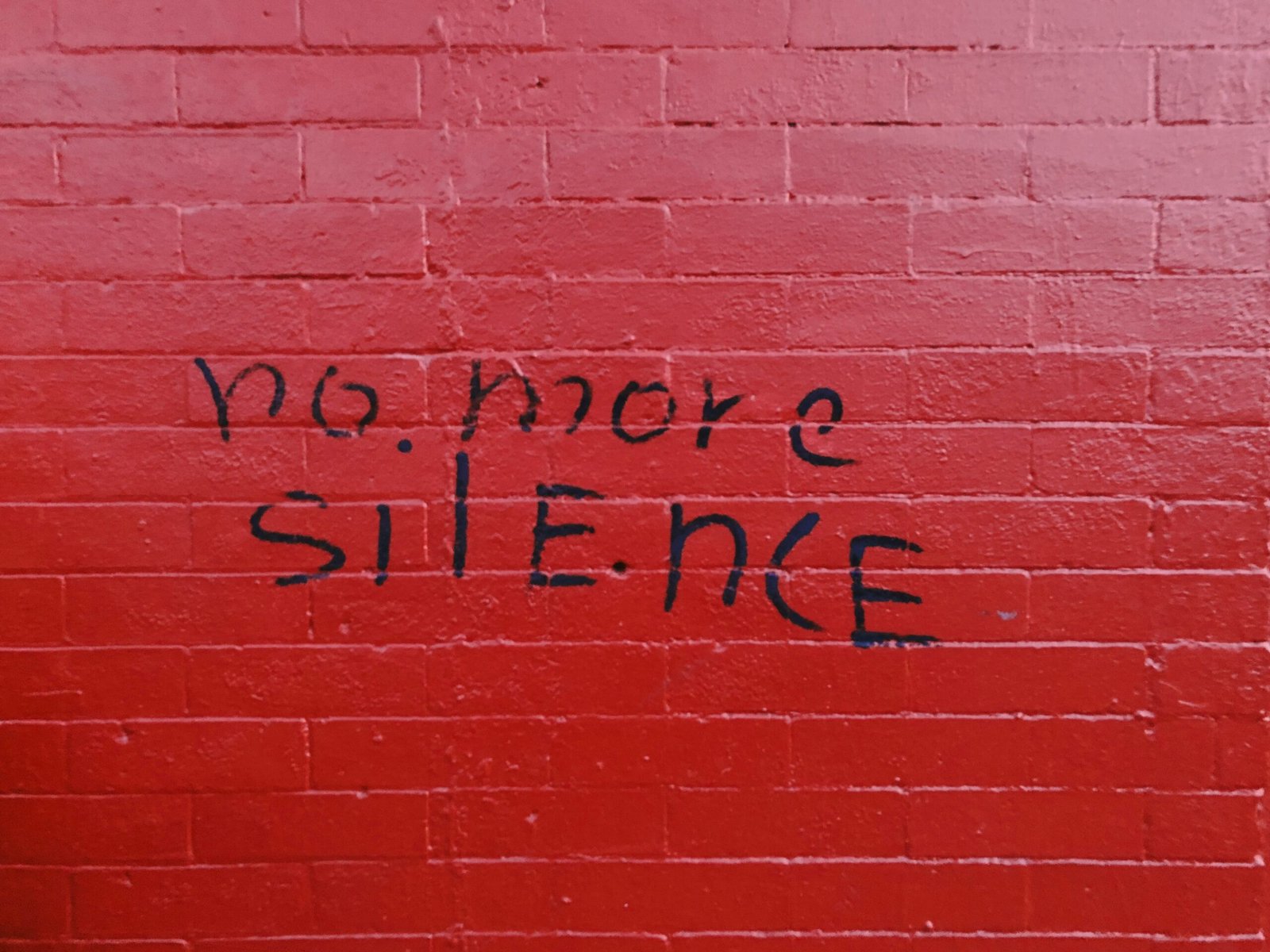
These are both very moving stories. Like Danny and Jia, it is very important that, however difficult it may be, stutterers such as myself learn to feel confident in themselves by stuttering freely and not allowing ourselves to be silenced.
Conclusion
Stuttering is a deeply personal experience that can play a significant role in the way individuals interact with the world around them. It can have a serious impact on mental health, confidence and social interactions in ways that are both visible and invisible to people who do not live with it. Stories of people such as Jia Bin and Danny Litwack serve to remind us that stuttering is not a barrier to a fulfilling life and that we should always live unapologetically as ourselves. Stuttering itself should not be a problem at all and what really matters is how society responds, hopefully (but sadly not always) with understanding, accessibility and inclusion.
Cultural perceptions around stuttering also vary but, around the world, stutters often face similar challenges such as a pressure to hide their speech, a fear of judgement and the exhaustion of living in a world where anything other than total fluency is too often regarded as “other”. For stutterers such as myself, embracing our voices (even when they require some patience) is paramount.
References
https://www.bbc.co.uk/future/article/20240131-the-people-embracing-their-stutter
https://pubmed.ncbi.nlm.nih.gov/33818900
Just a rant, does not contain useful information
by inStutter
I Embrace and Accept My Stutter
https://www.youngminds.org.uk/young-person/blog/how-having-a-stutter-affects-my-mental-health/
Leave a Reply